My E-Portfolio
Why Biosystems?
I chose biosystems engineering because I have always had an interest in both the outdoors and science. Growing up, my grandmother would often take me to the McWane Science Center in Birmingham, Alabama. This is where my love of STEM first began. I would get so excited to go and see all the exhibits, begging constantly to go back. Additionally, my family was very outdoor-centered. We would often go camping in places around the South. With these two things combined, biosystems was not even a question. I came to E-Day in 2022 and fell in love immediately with the department.


My first time fishing

Enclosed terrarium project my senior year of high school

One of my hikes in the Smokey Mountains
My main career goal is to secure a path in the field of ecosystem conservation and sustainable practices.
Course Reflections
Watershed Modeling
My Current Classes
Environmental Law
Senior Design
Waste Management
Coastal Ecological Engineering
BSEN 5570
In the fall of 2025, I was able to take coastal ecological engineering. This class created my interest in coastal work, as before I did not have a good idea of the type of ecosystem and habitat restoration needed to keep our coasts healthy and beautiful. This class was centered around engineering principles such as wave theory, sedimentation, water quality, and sea level rise, which provided me a strong foundation of knowledge.
We had two final projects: one presentation revolving around a coastal structure we were most interested in, and building a model of Mobile Bay using EFDC+.


Mobile Bay Model Grid: Created in EFDC+
Calibrated Water Surface Level Results from EFDC+
Natural Resource Conservation
BSEN 3230
In the spring of 2025, I was able to take one of my favorite classes at Auburn: Natural Resource Conservation. This class was centered around the biological principles that make up environmental engineering. In this class I learned topics such as watershed delineation and analysis, TR55 calculations, stream assessment, and sediment analysis.

Me conducting a stream asessment on campus
Hydraulic Transport in Biological Systems
BSEN 3310
In my junior year, I was able to take Hydraulic Transport in Biological Systems. This course is centered around the engineering behind fluid transport in various scenarios. Throughout the semester, many key concepts were enforced inside the classroom and in the lab, such as fluid statics, energy balancing, and flow differentiation. Understanding hydraulic transport is vital, particularly as an ecological engineer, as a lot of work centers around the movement of water. This course has enabled me to understand three hydraulic applications I have always been curious about: boats, a hydraulic dam, and the hydraulics at work in the human body. I am most interested in boats, and through BSEN 3310 I have been able to understand the engineering design behind creating these vessels.


Vital Equations in Boat Design


Buoyancy Force: The buoyant force acting on a body of uniform density immersed in a fluid is equal to the weight of the fluid displaced by the body, and it acts upward through the centroid of the displaced volume. This is how a boat is able to float on the water. However, the density of the boat must remain less than the density of the fluid displaced. If the density becomes equal, the boat will submerge and float in the middle of the water. If the density becomes greater, the boat will sink to the bottom.
Drag and Lift Force + Coefficients: Lift is the horizontal force created by perpendicular pressure gradients that push the boat forward. The lift coefficient can range from 0.4-1.5 depending on the boat’s structure. Drag is the resistive force created when an object moves through a fluid. The drag coefficient should be minimized in boat design
Reynold's Number: The Reynold's number is the ratio of inertial forces to viscous forces. It determines whether flow is laminar or turbulent. It can be used to understand the flow around the hull and optimize drag and resistance.
Froude's Number: Froude's number is the ratio of velocity to the square root of gravity and the critical length (waterline of boat). It is used to estimate how much wave resistance is being created by the ship. A critical Froude number can be found, which determines how much resistance a hull can take before the ship becomes unstable and the drag is unmanageable.
Fourier's Law of Conduction: Although not taught in BSEN 3310, but rather BSEN 2240, these equations are still crucial in boat design. Fourier's Law of Conduction allows engineers to manage the thermal performance of the hull to ensure safety for its passengers and understand the durability of the boat.
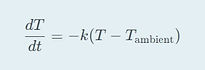
Newton's Law of Cooling: Newton's Law of cooling is essential in the design of the engine cooling systems. Heat dissipation needs to be regularly checked to ensure efficiency and to prevent overheating, which would damage the entire boat. This is done through temperature monitoring, which Newton's Law of Cooling is crucial for.

In the lab for hydraulic transport, we had many hands on experiences working with key concepts ranging from fluid viscosity to head loss in pipes. My favorite lab would be the flow behavior lab, where we analyzed various household fluids with an IKA digital viscometer. Our data was then used to classify these fluids as pseudoplastic, Newtonian, or dilatant. This lab is my favorite because it connected objects that I had seen all of my life to the engineering fundamentals I had been building at my time in Auburn. In my future career as an ecological engineer, I will primarily deal with the movement and behavior of water. This lab has given me the skills to break down the fluid's behavior, classify the fluid, and connect it to hydraulic systems.
One of the primary learning outcomes in the BSEN program is to be able to use the techniques, skills, and modern engineering tools necessary for engineering practice. In the flow behavior lab and all other labs in hydraulic transport, we worked with various machinery and analysis tools to complete our lab objectives. This has enabled me to grow in the engineering practice. In the future, I want to keep expanding my horizons and become familiar with more engineering tools and devices.
Heat and Mass Transfer
BSEN 2240
In the spring of 2024, I took Biological and Bioenvironmental Heat and Mass Transfer. This course provides a basic understanding of heat and mass transfer processes needed to design biological systems. Whether we realize or not, heat and mass transfers are all around us. Similarly to BSEN 3310, this course has enabled me to understand three concepts I have always been curious about: convection heat transfer, how a heat exchanger works, and the benefits of heat transfer from finned surfaces.
Convection Heat Transfer

The definition of convection heat transfer is "the transfer of heat between two bodies by currents of moving gas or fluid". One prime example of this would be cooking something on the stove. If you put your hand over the top of the pan, you will feel the heat in the air. I myself really enjoy cooking, so this application was very interesting to learn about.
Through BSEN 2240, I have learned to take my physical evidence of heat convection to actual analytical evidence. Above, you will see Newton's Law of Cooling, the main equation to calculate convection heat transfer. I have learned to apply this equation to various surfaces, such as plane walls, cylinders, and spheres.
With this new knowledge, I am better prepared for my future in the workplace. If I decide to be a design engineer, I will be tasked with being able to identify simple processes and transfers like this. I am confident that I have learned the concepts required to do this.
Heat Transfer from Fins

The most common application of fins in heat transfer would be the household AC/heating unit. The sides of the system feature fins to maximize heat transfer rate. This application is very common, especially in the US so I have always been curious about how it works.
Through BSEN 2240, I have learned the types of fins in system analysis and a way to measure the efficiency of the fin. In the above equation, you can see how to calculate the precise efficiency of the fin you are implementing. There are various equations you can use for Qfin depending on the type.
When first learning this topic, I had some trouble discerning what the purpose of the finned design was. After going through the lessons from class, I can now understand the use and method behind it. Once again, this concept will enable me to become a better design engineer in the future.
Heat Exchangers

A heat exchanger is a device that allows the exchange of heat between two fluids without allowing them to mix with each other. These devices are used often in the industry, with the most common being the double-pipe heat exchanger. In class, we have learned various methods to solve analysis problems, such as the LMTD method. The equations above are used in the LMTD method to solve for the heat exchange and the temperature gradient.
Learning this topic has broadened my knowledge of industry grade applications. Up until this point, the topics have connected to applications that I had previous knowledge of, like simple surfaces and heating units. Working with heat exchangers has improved my analysis methods. This will be greatly helpful if I get a career working with more industry grade technologies.
Engineering Methods for Biological Systems
BSEN 2210
In the fall of 2023, I took Engineering Methods for Biological Systems. This is the first real course you take as a biosystems engineer at Auburn. The course introduces key skills and concepts needed for engineering, such as design methodology, 3-D modeling, and project management.
Throughout the semester, you and your assigned group work on a water filter design project. The goal of the project is to design a water filter with found materials, and make it efficient enough to filter the water to a certain degree.To the left is a clip of my group's water filter in action!
Being in this class truly built the foundations of my engineering career. I gained insight into what an engineer actually does and the skills needed to prosper. Through the group project, I learned things such as time management, communication, and the power of trial and error. By starting small with a project like the water filter, it set me up with the right mindset to take on bigger projects. As an ecological engineer, the experiences I had in this class will set me up to handle challenges in the workplace, particularly in design.